Bringing Objects to Life, Etnografiska Museum x SouthNord x IASPIS x NKF x Konstfack
Stockholm, Sweden
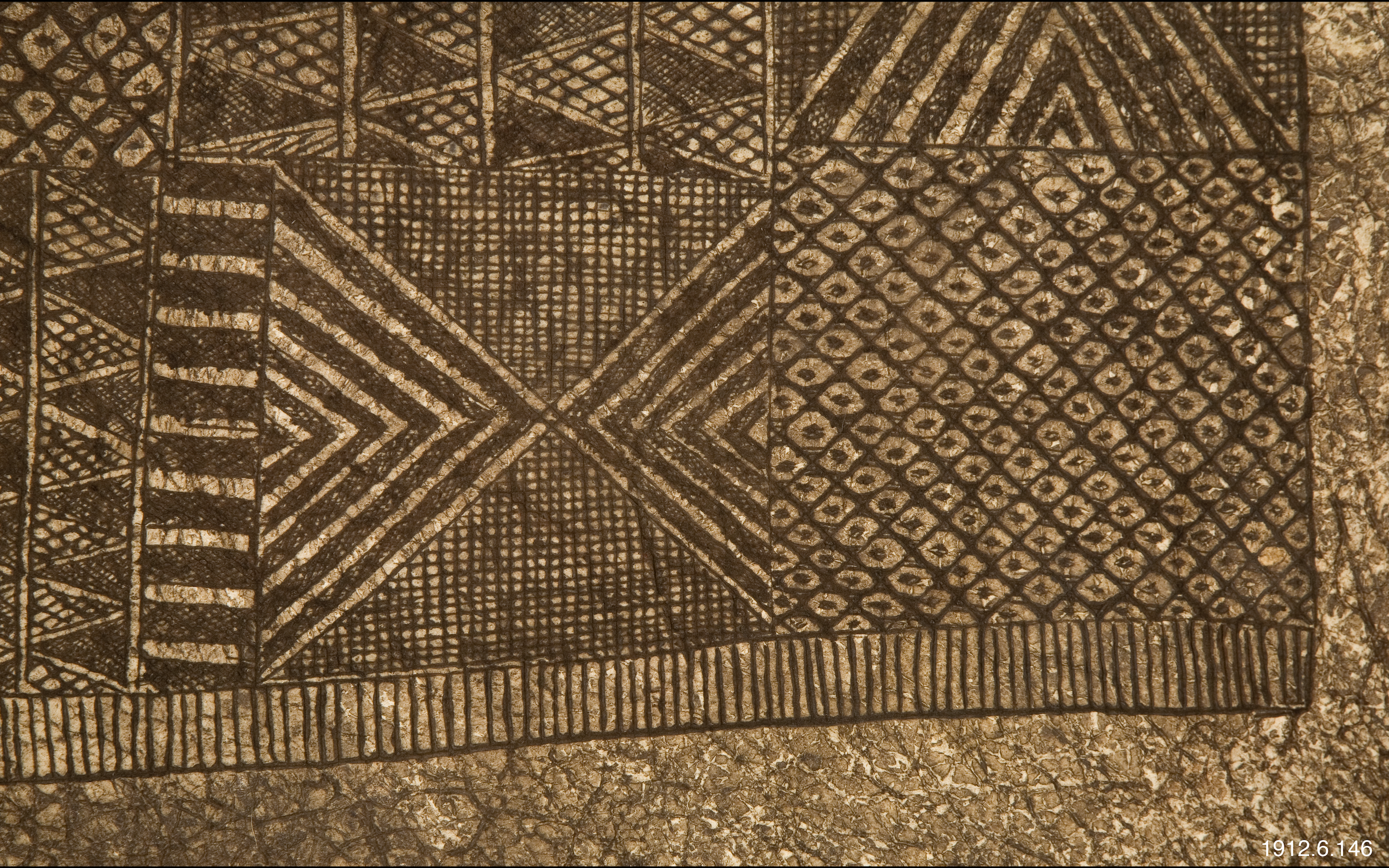
Nja (I’ll Go) is an ongoing artistic research and installation project in which I respond to a collection of baTwa leather cloaks held in the Etnografiska museet in Stockholm. These cloaks were taken from the Bangweulu wetlands in present day Zambia during the 1911 to 1912 Rhodesia Congo expedition led by Eric von Rosen, whose ethnographic collecting practices were entangled with colonial extraction and racialised systems of knowledge. (He was a prominent Swedish Nazi)
Rather than treating the cloaks as static ethnographic artefacts, I approach them as living ecologies of relation. Objects shaped by land, animal life, material knowledge, and wetland cosmologies. Today, none of these cloaks remain in Zambia. The lechwe antelope whose hide made them possible is extinct, and knowledge of their making no longer circulates within living memory. This layered absence of object, species, and intergenerational knowledge forms the conceptual ground of the work.
The title Nja, from iciBemba, refers both to the lechwe and to the phrase “I’ll go.” Within the project, this becomes an ethical gesture. A movement away from extractive colonial ways of relating, and toward practices of remembrance, repair, and ecological care.
At the centre of the installation is a large textile composed of experimental biomaterial bio leather sheets made from coffee grounds, alginate, and natural additives. These sheets are cut, etched, dyed, stitched, and assembled (?) into a fractured surface that echoes the form of the original cloaks while foregrounding breakage and repair. The material is intentionally future facing. A leather substitute that acknowledges extinction, ecological responsibility, and the loss of craft knowledge tied to specific animals and environments.
Surface patterns are informed by archival baTwa cloak designs and textile practices from neighbouring Zambian cultures. This reflects my own lineage as muTonga and Lunda Kazembe and my question of how to work alongside rather than on baTwa histories.
Alongside the textile, I create cyanotype prints on coffee filter paper and shredded and re worked copies of von Rosen’s writings. Here, photography becomes a method of critical refusal rather than documentation, unsettling the authority of colonial image making and museum display.
A layered soundscape forms the auditory heart of the installation, weaving together wetland field recordings, archival silences from museum vaults, fragments of poetry, and oral histories. Sound shifts attention away from the visual dominance of the archive and toward listening, presence, and ecological memory.
Grounded in my self defined methodology of Radical Zambezian Reimagination, Nja asks:
How can materials carry the memory of what has vanished?
What does repair mean in the context of colonial collections?
Can making become a form of listening?
What happens if an artwork is allowed to be ephemeral rather than preserved?
Nja (I’ll Go) is not an attempt to reconstruct the past. It is an act of relife that creates space for ancestral knowledge, ecological thinking, and relational futures to re enter the present through material, sound, and story.
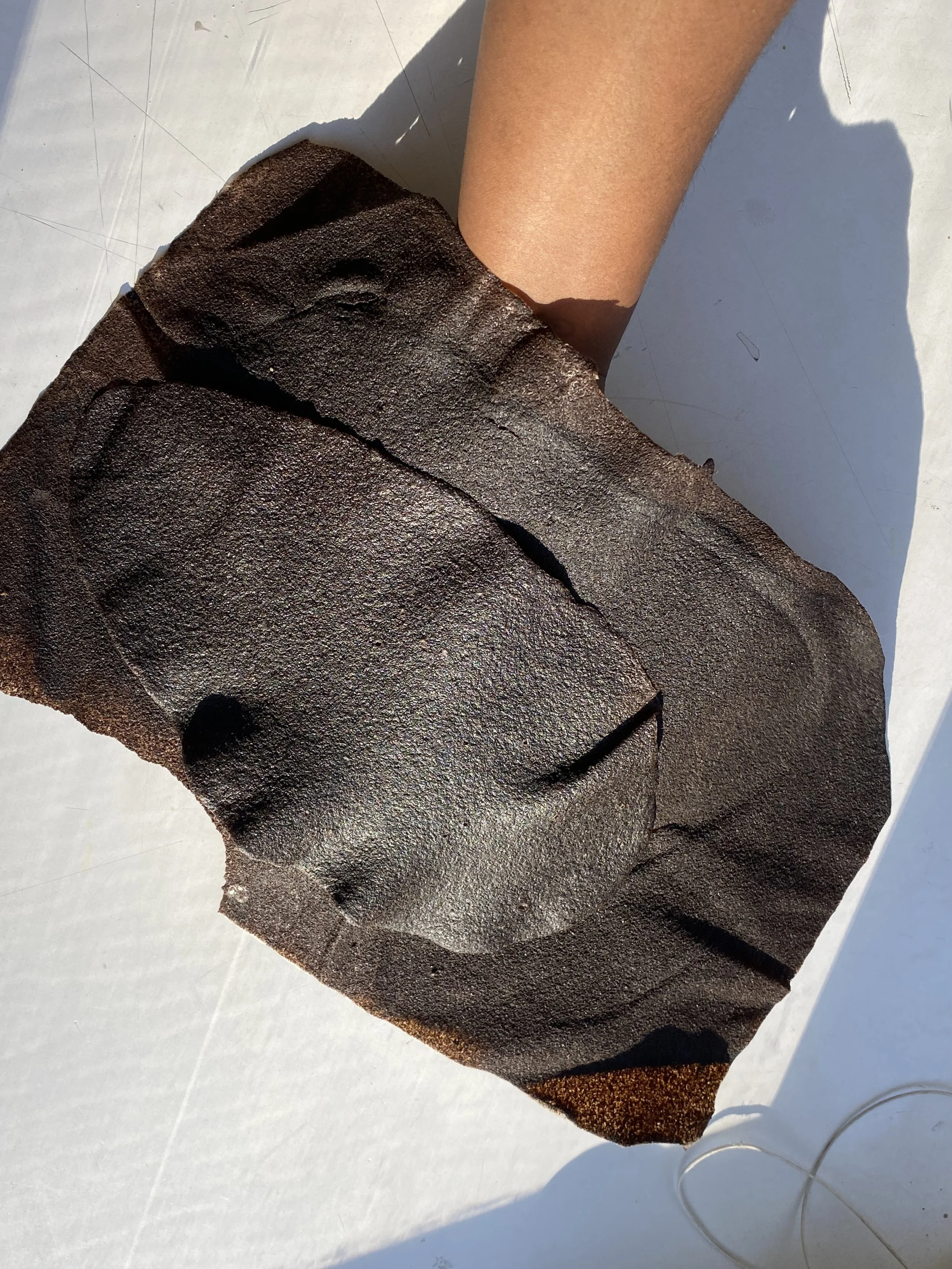
Bioleather Experimentation
Made from coffee grounds, the sheet is formed through a process of casting and ionic setting rather than tanning. The surface holds visible particles, irregularities, and tonal shifts that come directly from the organic matter embedded within it. No two sheets are the same. Each one records the balance between binder, filler, moisture, and time.
I work with this material as a future facing substitute for lechwe leather, acknowledging the extinction of the animal, the loss of craft knowledge tied to wetland life, and the ecological responsibility of making in the present. Rather than replicating the original cloaks, the bioleather allows me to think with absence, fracture, and repair.
The material remains slightly unpredictable. It bends, creases, softens, and ages in ways that resist the fixed permanence expected of museum objects. In this way, the bioleather is not only a surface but a proposition. A way of asking how materials can carry memory, and how making can become a form of listening.
Poetry as Research
As the cloak, with the cloak, in the cloak, beneath the cloak.
Although no longer attached to the back that broke and turned to dust amongst the muddied bloodied grasses at Nsobe. I remember.
——
Wet-land, what land, a swap land to you
Cloak a truth and choke us as we grind down rows of teeth to swallow the hardened rock you place under our tongues
put our words to sleep.
—-
Seeds and six legged creatures coalesce
Black and alike gathered at the foot of a conical shaped castle.
Sloping
dotted around soils red and warm where they till til …
—
Tales told, the grey and folded remember
Scribbles to measure
phenotypes
phrenology
Genotypes
Zoology
As the camera, within the camera, in front of the camera
I shut my eye to your face in front of me
a bone breaking click /////////////////////////////
Covered in residual plaster- blocked the airways of your nostril flaring to stay alive
Your feet heavy with sediment,
I take you home in my spiny rolls
Rolling suitcase leaving tracks and gashes from Cape to Cairo
Clicks as gashes, images as wounds
Wound up in ways of the westward winds
Calling on the swamp people to speak on why their lands need your hands to cradle
Til you crush the needle that once stitched together cosmos and clusters.
—-
Post mortem (as me)
After it all
I sat in a cove in the wall
Green and soft, watching pixels on the screen float by in clusters that spoke.
I listened, I was there
in part,
the other was left
on the magasin floor,
Blue
Sticky
heavy
Ringing bells that no longer sound
Outside of cold, white
Hard floored.