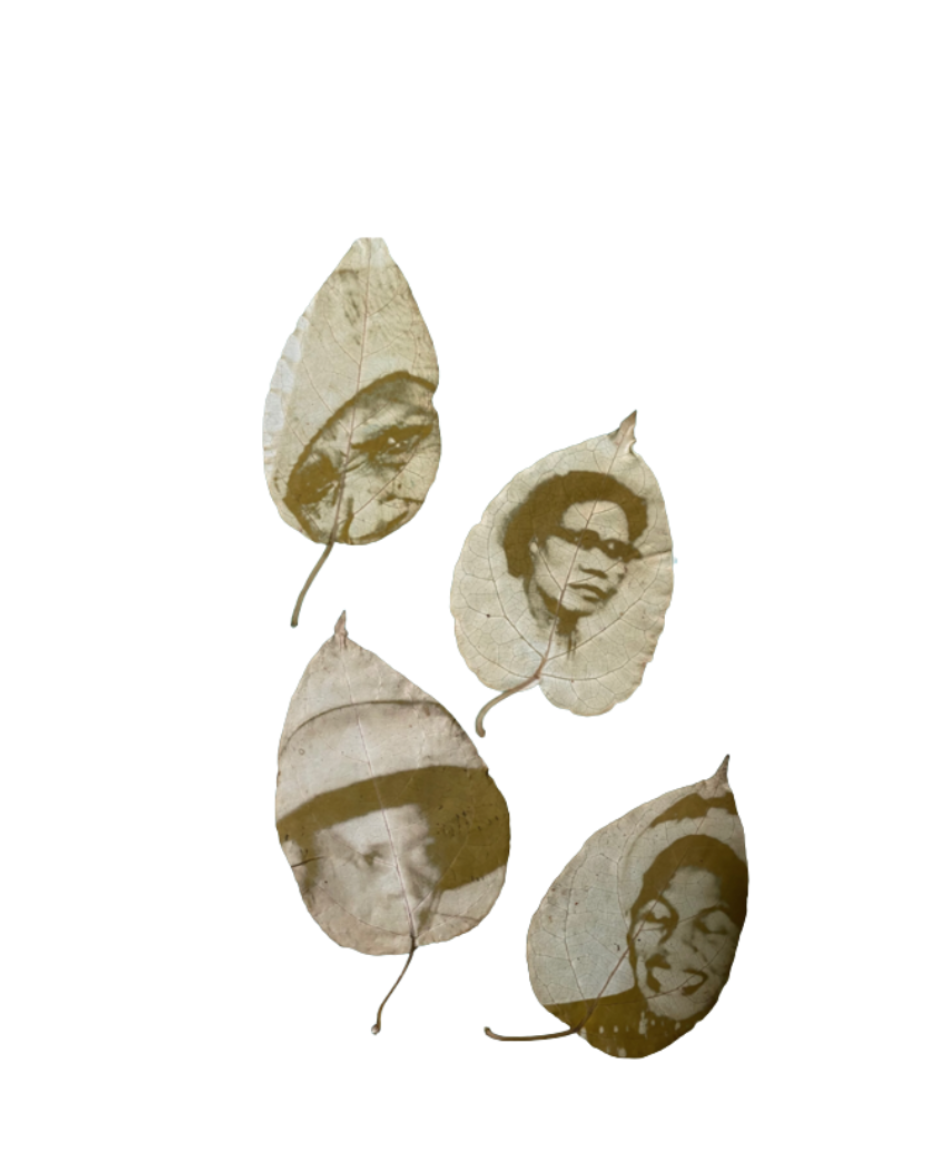
Matriarchs: Alternative Printing Series
This project is an exploration of self through the tracing of maternal lines and relationships, expressed through delicate alternative photographic processes including chlorophyll printing and anthotypes. Chlorophyll printing develops or bleaches images onto the surfaces of leaves through the interaction of chlorophyll and sunlight, while anthotypes use plant-based pigments to create images in light-sensitive emulsions, allowing organic matter itself to become the medium of memory.
The images that form the basis of these prints come from multiple sources. They include photographic offerings drawn from various seeds and parts of mikowa, the family tree, collected from the home or its extensions, interviews and Whatsapp chats with close family members about ancestral mothers, and images drawn from the colonial archive. These archival images are reinterpreted, alchemised, and placed in dialogue with familial and ancestral traces.
In addition, this body of work engages with speculative reimaginings of ancestral presence. Through AI and other creative interventions, I generate alchemised images of baTonga and baBemba women both living and ancestral, interweaving historical traces, memory, and imaginative possibility. These images serve not only as representations but as vessels for ancestral knowledge, bridging past, present, and speculative futures.
Rebecca Buumba Banji Kalimina (née Hikabonga)

Mukowa
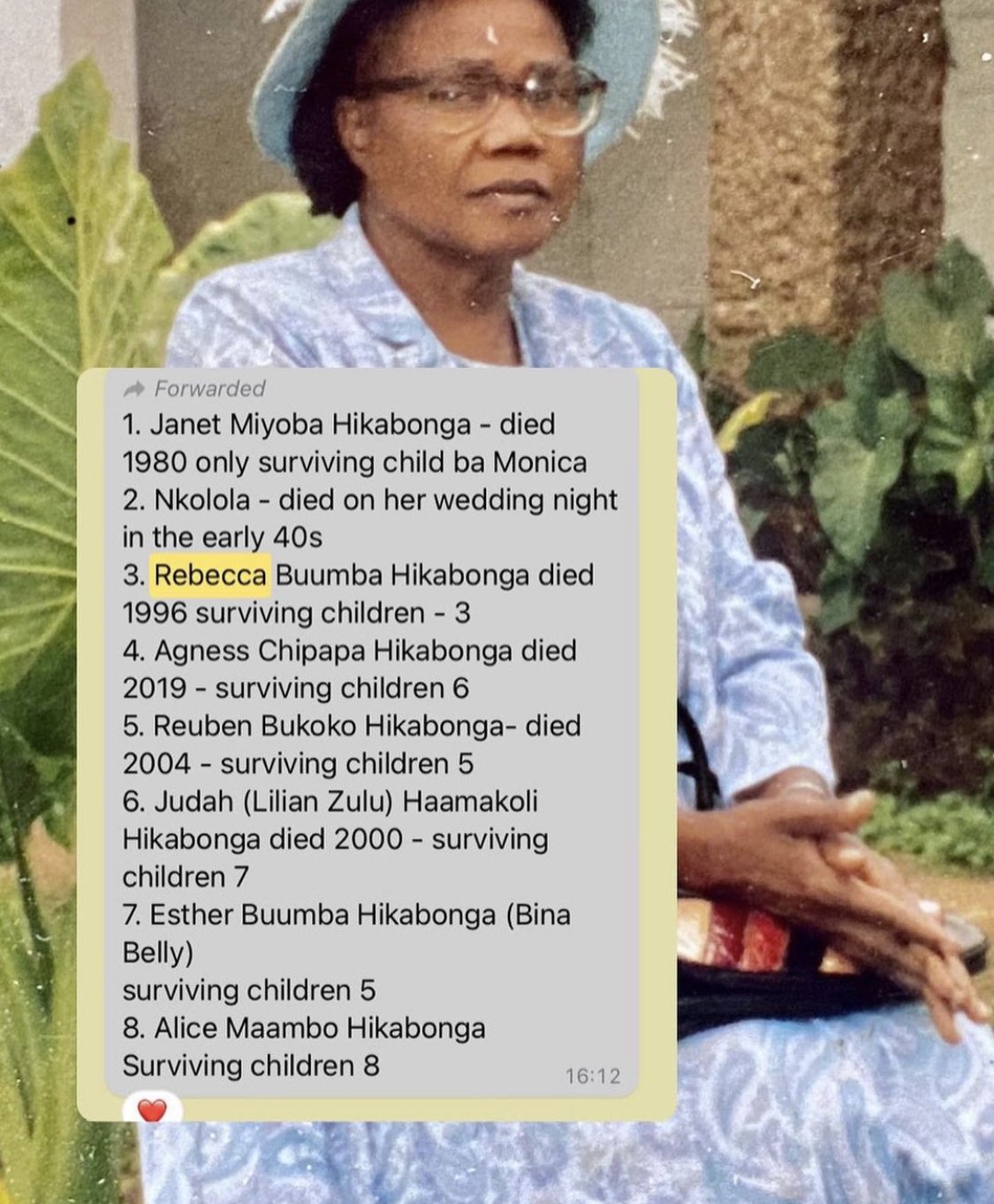
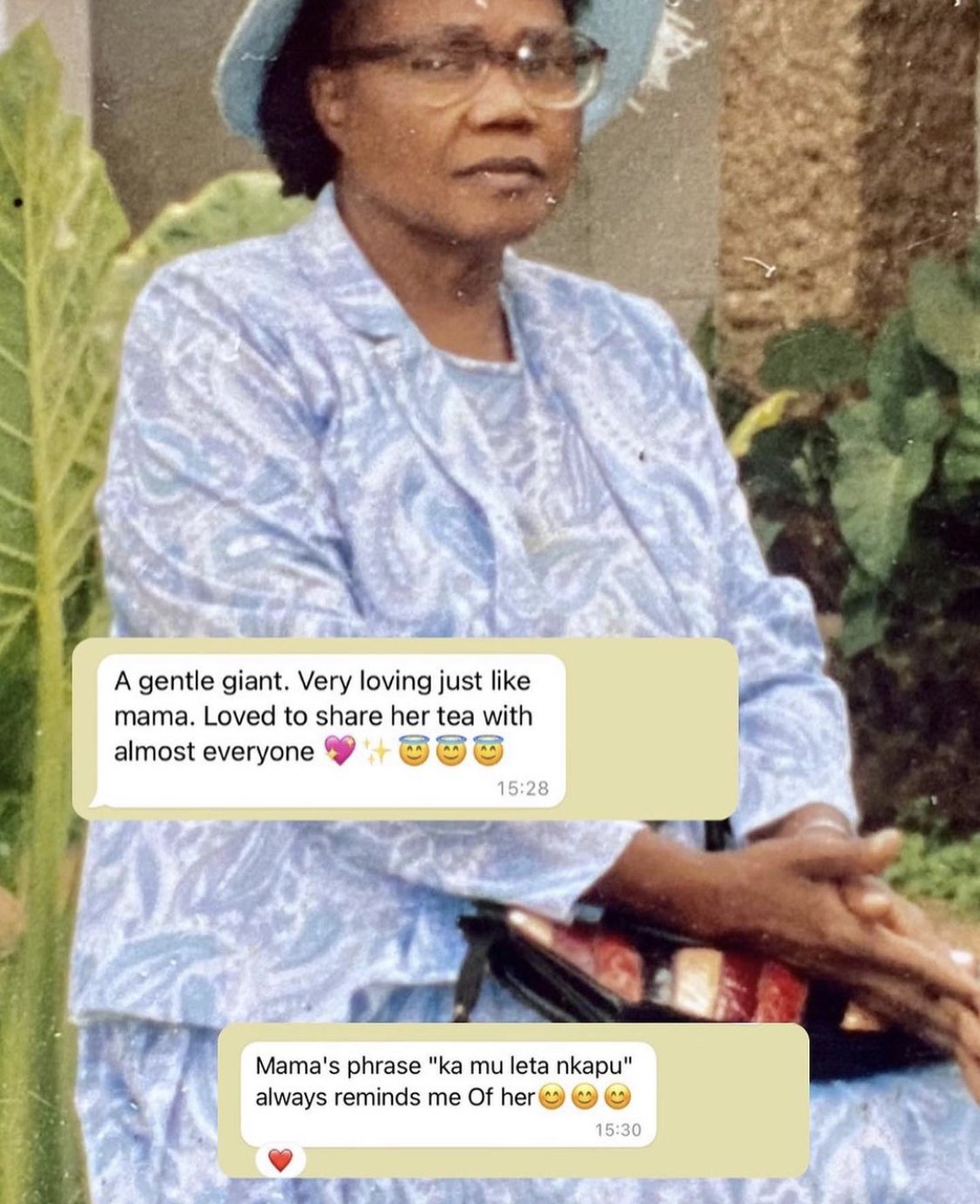
Rebecca Buumba Banji Kalimina (née Hikabonga) was my father’s mother’s mother making her my great grandmother and the woman whose names I carry (Banji Buumba Rebecca Chona) She crossed over to ancestral homelands a year before I landed on this plane, so I didn’t get to meet her but feel so deeply connected to her spirit (as she’s a being in and of mine). I asked her grandchildren, my fathers siblings [and her daughters children] to describe her to me and it was quite special that both my uncle and aunt who were asked at separate times in separate spaces came up with almost identical answers. Which rings a truth. A gentle, tea loving woman who loved having people around for chats and hugs in mugs. Her love of tea surely filtered down to her children, especially my grandmother, and her children’s children’s (my father and his siblings)
children (me). My grandmother, her daughter, was incredibly passionate and punctual about her tea times, even throughout her Alzheimer’s. She forgot a lot, but not about tea. “Kamu leta nkapu” / Can you bring the cups was probably her grounding sentence rooted in a grounding feeling. So many connections. Tracing these matrilineal lines is such an electric process of discovery.

ABOVE
digitised anlogue photo of Rebecca Buumba Banji Kalimina (née Hikabonga). Found in the Chona Family Archive, Lusaka, Zambia
BELOW
Whatsapp chat archive about Rebecca Buumba Banji Kalimina (née Hikabonga).

Victoria Moonga Chona (née Kalimina)
I am still finding the words and the language to write what I need to here. I will come back…
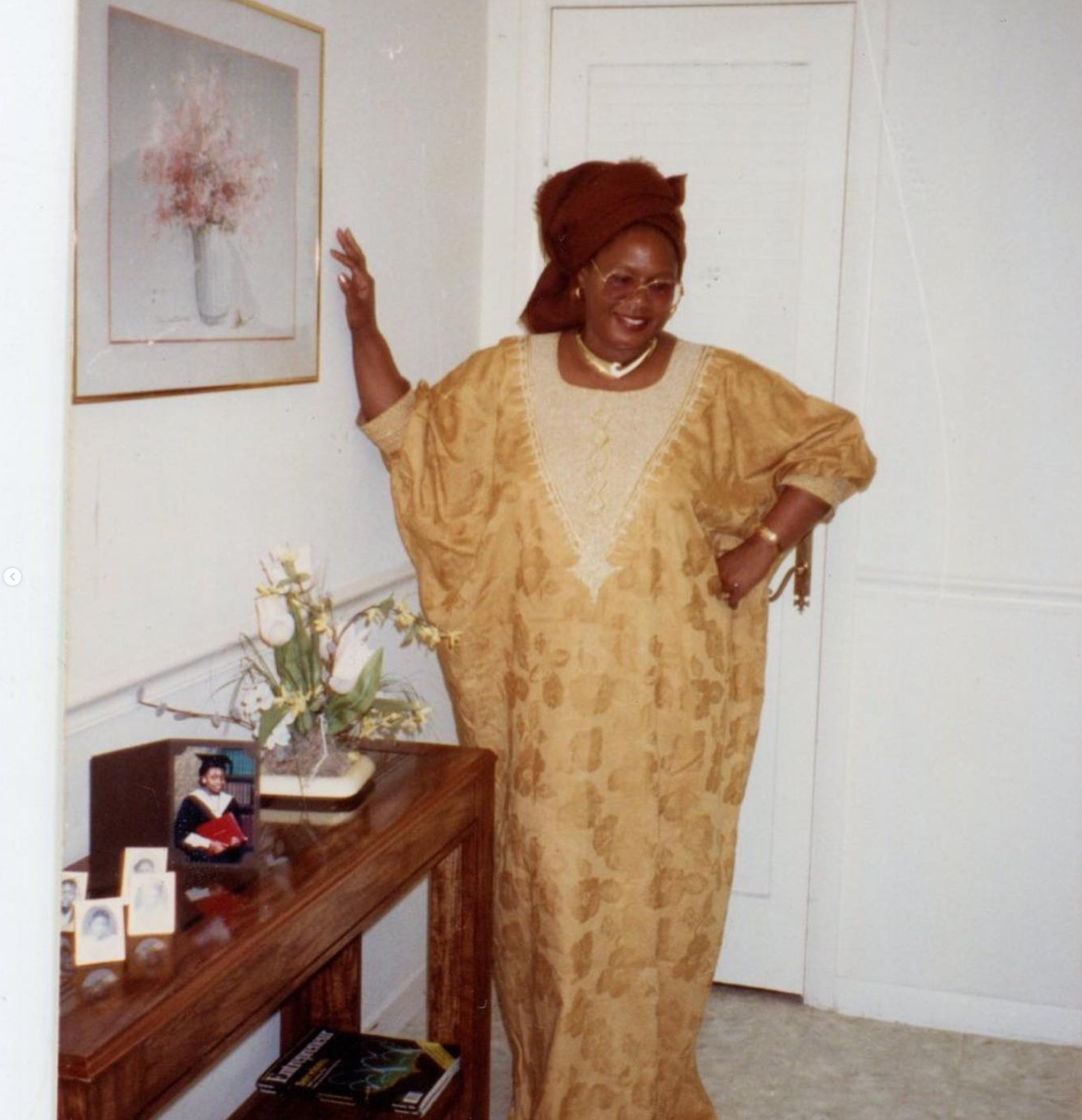
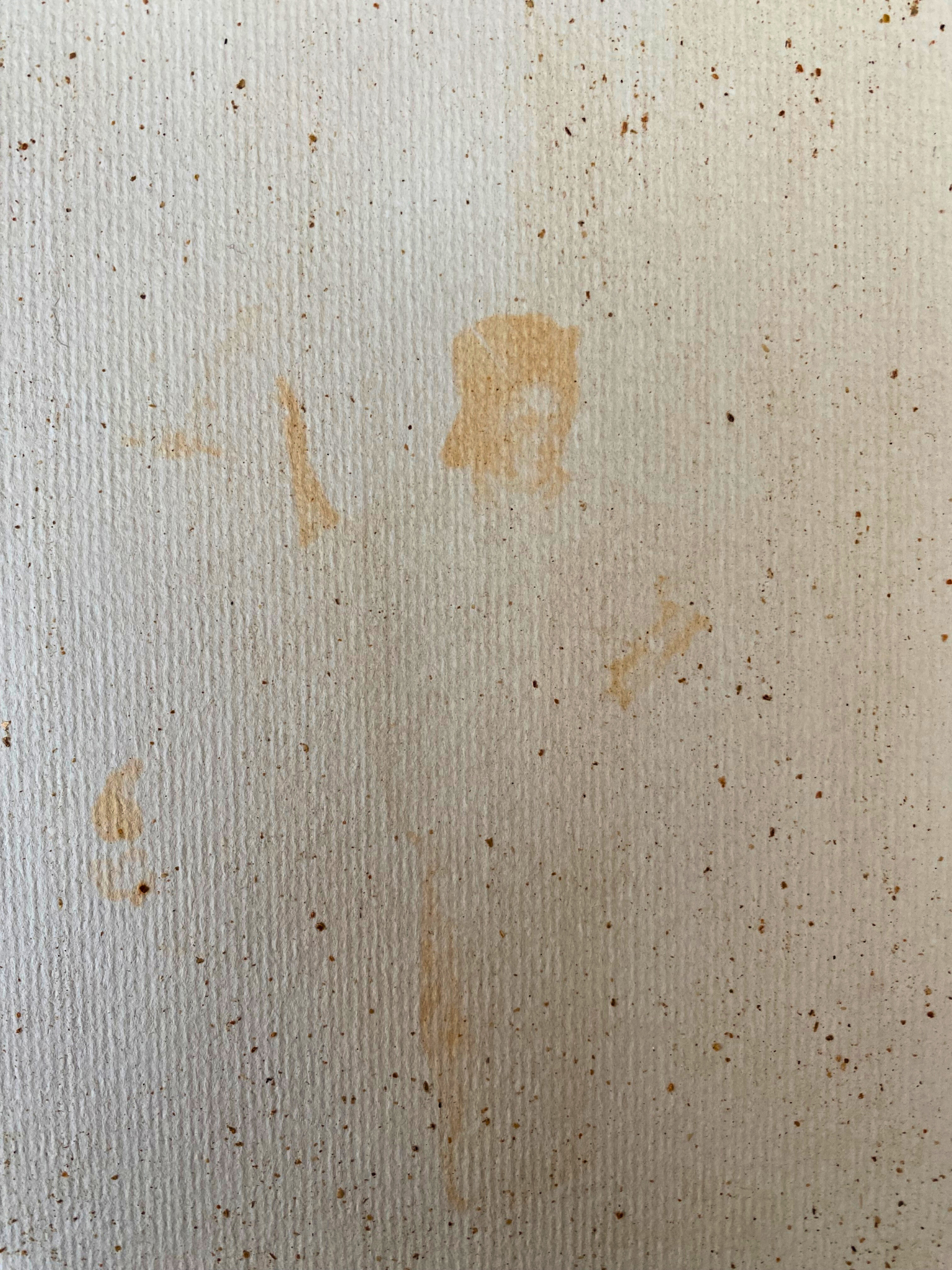
RIGHT
paprika anthotype of an anlogue photo of Victoria Moonga Kalimina Chona. Found in the Chona Family Archive, Lusaka, Zambia
LEFT
original photo
Archive
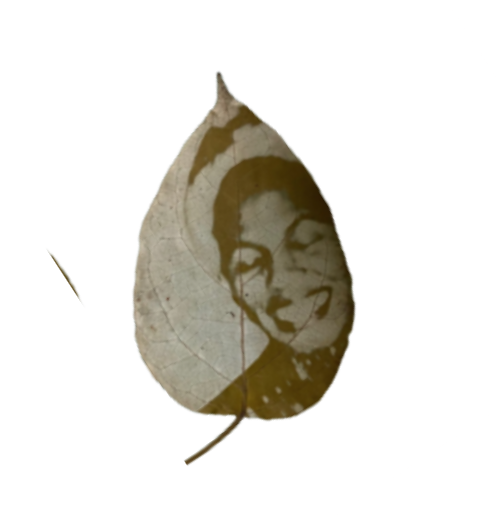
Chlorophyll Print: Mutonga Woman
This chlorophyll print captures the spectral presence of a Mutonga woman, derived from an analogue photograph by Italian photographer Ilo Battigelli. His work extended to Southern Rhodesia (now Zimbabwe) in the late 1950s, where he photographed the construction of the Kariba Dam for its Italian contractor. He then opened a studio in Salisbury and continued to shoot studies of people and places.
The image was printed onto a mulberry leaf found growing on a tree in Maramba Town, Livingstone, Zambia. This locale, rich in cultural heritage, serves as a poignant backdrop for the ancestral lineage being explored. The mulberry leaf, with its delicate veins and texture, becomes a canvas for the interplay of light and organic matter, embodying the fusion of history and nature.
As a form of camera-less photography, the leaf print challenges and redefines the position of the camera and images as a colonial tool. Through this process, the chlorophyll print not only preserves the likeness of the subject but also imprints the essence of the medium, capturing a moment where memory, material, and place converge.
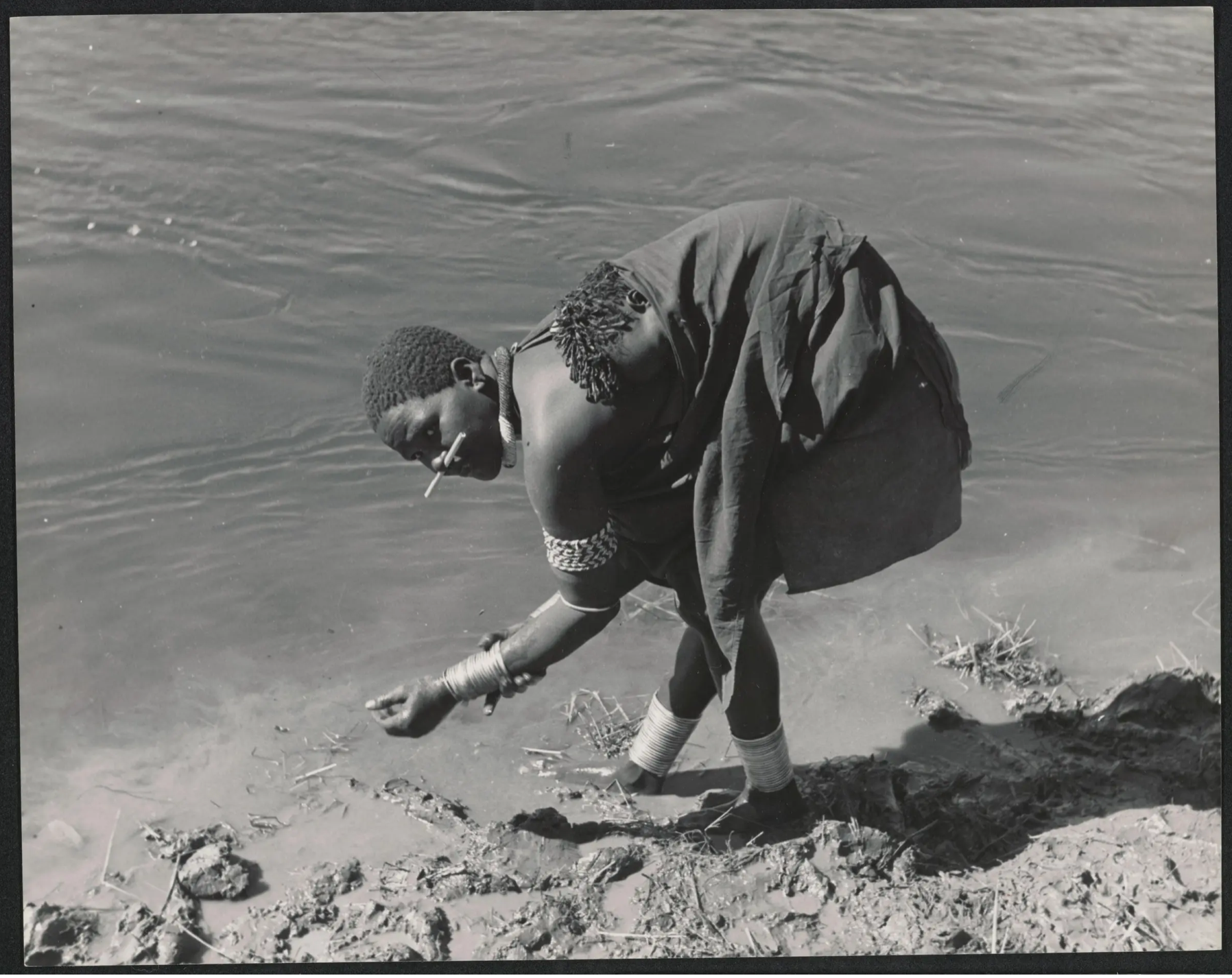
photograph by Ilo Alexander Battigelli
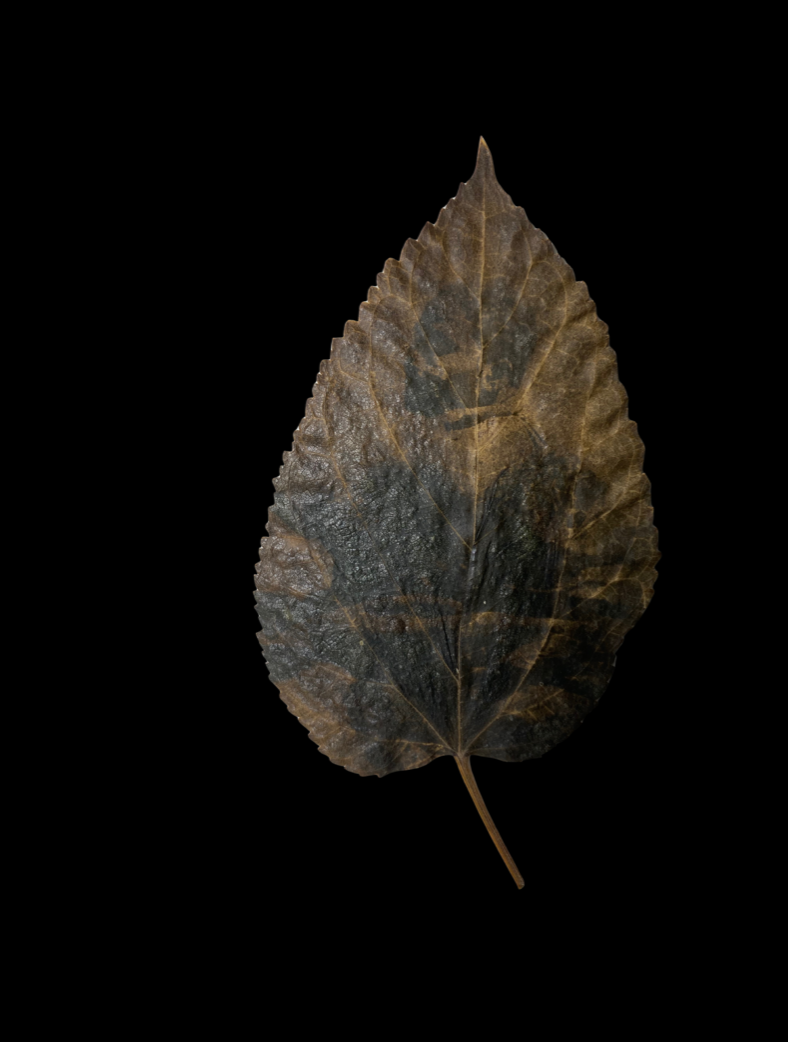
Chlorophyll print on Malubeni/Mulberry leaf